
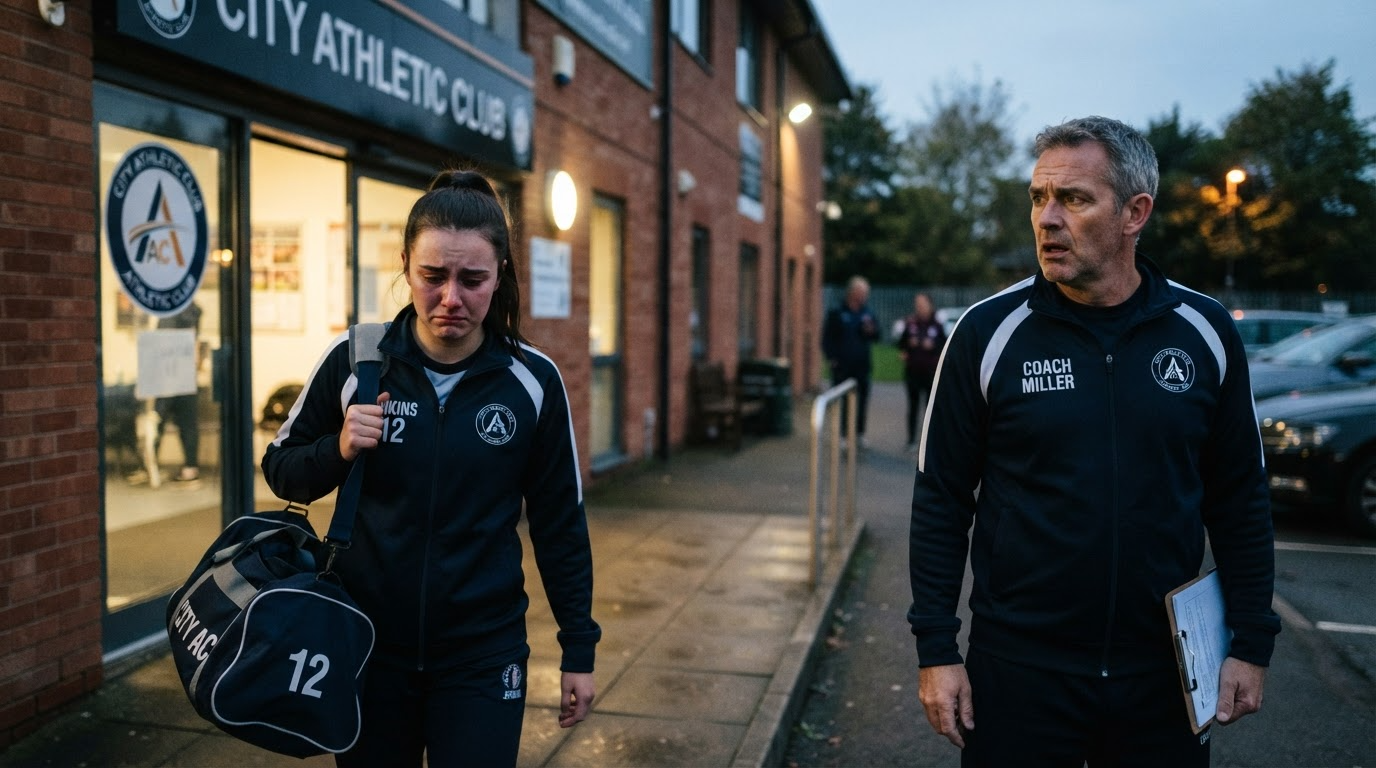
If you track when your club loses athletes, the pattern is consistent. Most dropout does not happen during a season. It happens between seasons, in the gap between the last session of one program and the first communication about the next one.
During a season, athletes are engaged. They are attending sessions. They are building relationships with coaches and teammates. The habit of showing up is active and it reinforces itself. Even athletes who are not progressing as quickly as they would like tend to continue through a season because the social and habitual momentum of regular participation carries them forward.
That momentum does not survive a gap automatically. When a season ends and the next program has not been communicated, that habitual momentum has nothing to carry it forward. Athletes who were attending regularly have no sessions to attend. The habit weakens. Other activities fill the schedule. And when the next registration period arrives weeks or months later, the habit of attending has been replaced by the habits that filled the gap.
This is the structural cause of between-season dropout. It is not that athletes changed their minds about the sport. It is that the continuity of engagement was broken by a gap that the club did not bridge effectively.
This blog explains why that gap forms, what closes it, and how the right combination of athlete tracking and timely communication keeps athletes engaged across seasons. You can read about converting summer athletes specifically in our blog on how to convert summer sports participants into fall season members
The Gap Is a Communication Problem, Not a Program Problem
Between-season dropout is almost never caused by dissatisfaction with the program. Athletes who leave between seasons overwhelmingly had positive experiences. They liked their coaches. They enjoyed the sport. They made progress.
The reason they do not return is that the gap between seasons created enough distance from the experience that the positive feelings faded before the re-enrollment decision was made. A family that received a timely, specific communication about what their child accomplished and what comes next would have acted on it. A family that received a generic thank-you email three weeks after the season ended, when the experience was already receding in memory, had much less to act on.
The gap is a communication problem. More specifically, it is a data problem that creates a communication problem. A club that does not have athlete development data cannot send specific, forward-looking communications. Without specific communications, the gap between seasons is filled with silence, and silence does not retain athletes.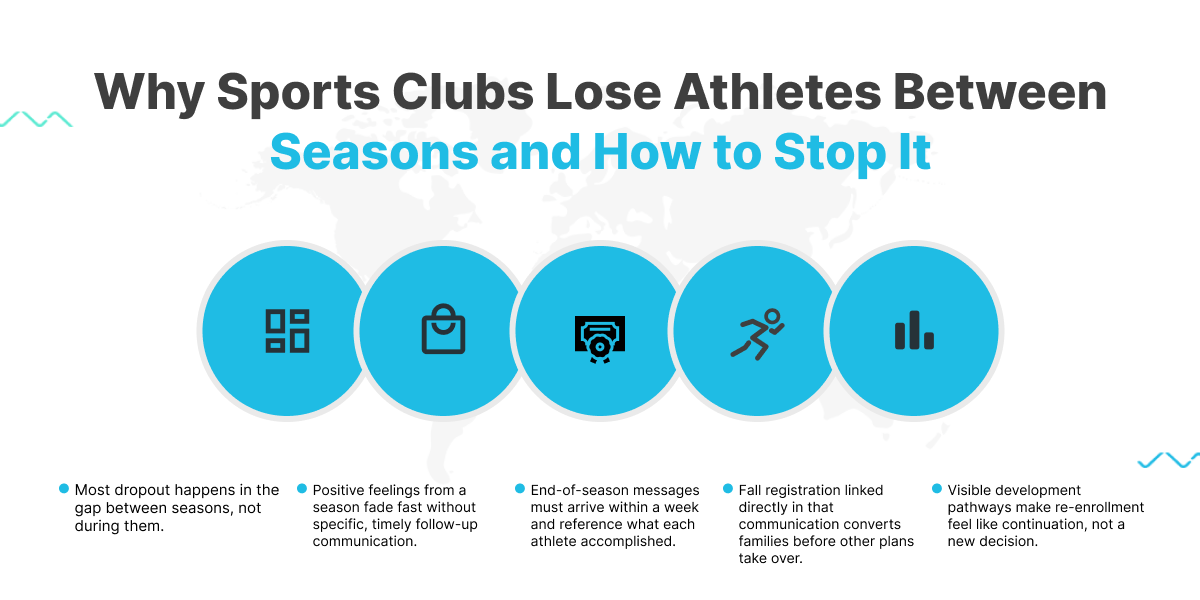
What Bridges the Gap
There are three things that consistently bridge the between-season gap and keep athletes engaged across program boundaries.
The first is end-of-season communication that arrives quickly and is specific to each athlete. The timing matters as much as the content. A communication that arrives within a week of the last session, while the experience is fresh and the habit is still active, is significantly more effective than the same communication arriving three weeks later. And a communication that tells each family specifically what their child accomplished and what they are ready for next gives families something concrete to act on.
The second is fall registration that is open and easy to complete immediately. The most effective end-of-season communication includes a direct link to fall registration and an enrollment deadline. When families can act on the communication immediately, conversion is highest. When they have to remember to come back later, many of them do not. See how Checklick’s Storefront makes fall re-enrollment seamless
The third is visible athlete development pathways that make the next step feel like a natural continuation rather than a new decision. When parents have been seeing their child’s progress displayed throughout the season and they know exactly where their child finished, the enrollment decision for fall is not a new decision. It is the continuation of a decision they made when they enrolled for summer. The pathway is visible. The next step is clear. The inertia is toward continuing rather than stopping.
How Digital Tracking Closes the Between-Season Gap
The connection between digital athlete tracking and between-season retention is direct. When coaches track athlete development throughout the summer using a platform like Checklick, the data that makes specific, timely, forward-looking end-of-season communication possible is already there when the season ends.
Administrators do not need to spend days compiling evaluation records. They do not need to contact each coach and ask what level each athlete achieved. The information is in the platform, organized and accessible, ready to inform targeted end-of-season outreach the moment the last session concludes. See how Checklick’s evaluation platform captures athlete development data automatically
The clubs that retain the most athletes between seasons are not necessarily the ones with the best programs or the most experienced coaches. They are the ones where the infrastructure for specific, timely, data-grounded communication is in place and working automatically as a byproduct of how coaches do their normal work.
Port Credit Yacht Club in Ontario addressed its between-season retention challenges by using Checklick’s progression displays to show parents exactly where each participant stood in the program pathway. The outcome was greater transparency for families and directly supported retention. The specific visibility that the platform provided was what converted families with positive feelings into families with a concrete reason to continue. Read the Port Credit Yacht Club success story
Practical Steps to Close Your Club’s Between-Season Gap
If your club is currently losing athletes between seasons and you recognize the pattern described in this blog, the practical starting point is evaluating your current data infrastructure. Are coaches tracking athlete development in a centralized, digital format during sessions? If not, the data needed for specific end-of-season communication is not being collected in a usable form. Is fall registration open and linked directly in your end-of-season communications? If not, families who are motivated by the communication have to do additional work to enroll.
Is there a visible development pathway that parents can see throughout the season? If not, families arrive at the re-enrollment decision without the ongoing evidence of development that makes continuing feel like the natural choice.
Each of these is an infrastructure question, not a coaching question. They are solvable with the right platform without requiring additional effort from coaches.
Checklick’s evaluations platform starts at fifteen dollars per month for clubs with under fifty evaluators. The Storefront charges 4.9% per transaction with no monthly fees. Both come with a thirty-day free trial. Phone and email support is available including weekends. See Checklick’s full pricing
Frequently Asked Questions
When do most sports clubs lose athletes?
Most dropout happens between seasons, not during them. The gap between the last session of one program and the first communication about the next one is when habitual momentum breaks down and athletes get replaced by other activities.
Why do athletes who had positive experiences still not return?
The positive feeling from a season fades if it is not reinforced by specific, timely communication about what was accomplished and what comes next. Generic end-of-season outreach that arrives weeks after the last session has too little to work with.
What is the most effective way to retain athletes between seasons?
Specific, timely end-of-season communication that references each athlete’s progress and links directly to fall registration. The communication needs to arrive quickly after the last session and include a direct path to enrollment.
How does digital athlete tracking reduce between-season dropout?
Digital tracking produces a complete end-of-season record for every athlete that enables specific, personalized re-enrollment communication. When the data exists and is accessible, specific communication is operationally easy. When it does not exist, only generic communication is possible.
Start your free trial at checklick.com and close the between-season gap that is costing your club athletes every year.