
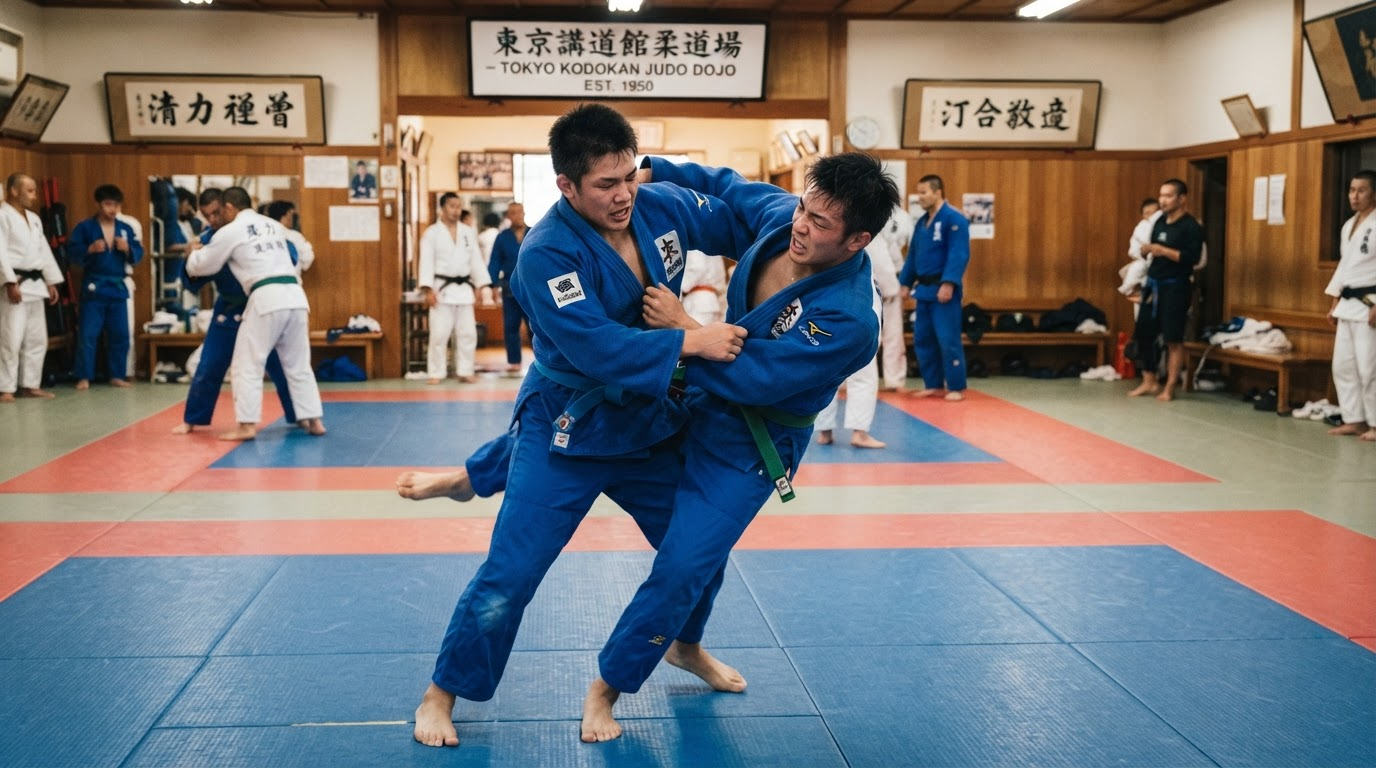
Of all the individual sports in Canada, combat sports like judo, wrestling, and taekwondo have some of the most clearly defined athlete development pathways. The progression structure is explicit. Belt levels in judo and taekwondo represent recognized, nationally standardized milestones. Wrestling development follows structured skill progressions through age and weight categories. Technique requirements at each level are specific, measurable, and formally recognized by national governing bodies.
In theory, these clear frameworks should make athlete tracking straightforward. In practice, most clubs that deliver these programs are still tracking athlete progression on paper, in binders, or in personal spreadsheets that belong to individual coaches rather than to the club. The structure exists. The data capture to prove athletes are moving through it generally does not.
This blog explains why digital tracking matters specifically for combat sports clubs, what the transition looks like in practice, and how clubs affiliated with Judo Canada, Wrestling Canada, and Taekwondo Canada can use a connected platform to manage athlete development across their membership. You can read the broader context on ADTS systems in our earlier blog on what is the difference between an Athlete Development Tracking System and an Athlete Management System
Why Combat Sports Clubs Are Particularly Well-Suited to Digital Tracking
The belt progression structure of judo and taekwondo, and the equivalent skill progression framework in wrestling, is one of the clearest articulations of athletic development pathways in all of sport. Each grade or belt level has defined technique requirements. Grading events assess whether athletes have met those requirements. Successful athletes advance. The pathway is structured, sequential, and formally recognized.
This structure is a natural fit for digital evaluation tools because the criteria are already defined. A judo club adopting Checklick does not have to design an evaluation framework from scratch. It translates the existing belt progression criteria into the platform’s skill matrix format, defines how each technique will be measured (demonstrated, demonstrated consistently, competition-ready), and deploys that matrix to coaches.
Once the matrix is in place, coaches evaluate athletes against those criteria during training sessions on their phones or tablets. The evaluation data flows immediately into a centralized system. When a grading event approaches, the club has a complete, current record of where every athlete stands against the criteria for their target grade level. When an athlete achieves a new belt or grade, that achievement is recorded in the platform and can produce a digital certificate with just a few clicks. See how Checklick’s evaluation tools work for combat sports clubs
The Specific Problems That Paper-Based Tracking Creates for Combat Sports Clubs
Paper-based tracking in combat sports clubs creates three specific problems that digital systems resolve directly.
The first is coach dependency. When an athlete’s progression records exist only in a coach’s personal notebook or on paper forms that the coach manages, those records leave the club when the coach does. A judo club that loses its head instructor also loses the complete evaluation history of every athlete that coach was working with. The incoming coach starts without knowing where each athlete stands in the grading pathway, which creates disruption, potential misassessment, and frustration for athletes and parents.
The second is grading event preparation. Preparing for a grading event manually requires the club to compile an accurate picture of where every athlete stands in their progression before the event. When evaluation records are on paper and distributed across multiple coaches’ files, this compilation takes significant time and is prone to errors. A club using a digital tracking system can generate a current progression report for every athlete at the click of a button.
The third is affiliation reporting. Clubs affiliated with Judo Canada, Wrestling Canada, or Taekwondo Canada have reporting requirements to their provincial and national governing bodies. Demonstrating that programs meet national curriculum standards, that athletes are being evaluated against the correct criteria, and that belt progressions and grade achievements are being recorded accurately are all part of those affiliation requirements. Paper-based records are harder to audit and verify than digital records maintained in a centralized system.
What the Administrative Foundation Looks Like at a Combat Sports Club
Before a combat sports club can benefit from digital athlete evaluation, it needs its registration and membership operations running cleanly. This is where most volunteer-run judo, wrestling, and taekwondo clubs start, and it is where the most immediate operational improvements happen.
Grapple Yukon Association and Northern Lights Judo Club in Yukon, Canada are two volunteer-run organizations delivering wrestling and judo programs to youth and adult athletes. Administrator Dan Poelman, who frequently travelled for work, needed a system that could centralize registration and membership management and make it accessible remotely.
Before adopting Checklick, registrations and memberships were tracked manually, data was tied to specific devices and locations, and managing operations remotely was difficult. After adopting Checklick for registration and membership management, records became instantly accessible from anywhere. Registrations and memberships became easier to manage and track. Operations became fully digital across both organizations.
Dan described the support experience as consistently positive and tailored to the organizations’ needs, with a team that listened and responded quickly to concerns.
This administrative foundation – centralized registration, accessible membership records, digital operations, is the starting point for any combat sports club looking to build toward structured athlete evaluation. Getting registration and membership running properly on a platform creates the operational clarity that makes adding evaluation tracking in subsequent seasons straightforward rather than complicated.
Read more success stories from clubs using Checklick
How to Set Up a Combat Sports Evaluation Framework in Checklick
Setting up a combat sports evaluation framework in Checklick follows the four-stage ADTS process: Create, Deploy, Measure, Adjust.
In the Create stage, the club builds its skill matrix inside Checklick. For a judo club, this means entering the technique requirements for each belt level as skill criteria, defining the measurement scale for each technique, and organizing everything by grade level. For a wrestling club, it means defining the skill progression criteria for each age and development category. The matrix can be built to mirror exactly what the national governing body specifies for each level.
In the Deploy stage, coaches are given access to the platform and begin recording evaluations during training sessions on their phones or tablets. The first time a coach evaluates an athlete through the platform, that evaluation is immediately available to the club administrator and to the parent through the platform.
In the Measure stage, administrators use Checklick’s reporting tools to pull participation numbers, progression rates, and technique completion data at any point during the season. Before a grading event, a report showing every athlete’s current standing against the grading criteria is available without any manual compilation. See how Checklick’s skill matrices and reporting tools work
In the Adjust stage, the data informs program planning for the next season. Which techniques are athletes consistently struggling with? At which belt level is the dropout rate highest? What does the age and experience distribution of the club’s membership look like? These questions, answered with data, produce better program decisions for the following year.
What Affiliations With National Governing Bodies Require
Clubs affiliated with Judo Canada, Wrestling Canada, or Taekwondo Canada operate within national curriculum frameworks that define how athletes should be evaluated and progressed through their sport. Digital tracking that produces audit-ready records of how those frameworks are being applied at the club level is a meaningful step toward meeting the data requirements that national affiliation increasingly involves.
Checklick’s Evaluation Marketplace allows national governing bodies and PSOs to distribute their evaluation frameworks to affiliated clubs through the platform, ensuring consistency across the network. When a club uses Checklick, its evaluation data is produced in a format that national bodies can aggregate and review. That connectivity between the club level and the governing body level is what makes the data useful at scale. See how Checklick’s Evaluation Marketplace works
Checklick is an all-in-one Athlete Development Tracking System and Sports Club Management System. The evaluations platform starts at fifteen dollars per month for clubs with under fifty evaluators, with a thirty-day free trial. Phone and email support is available including weekends.
Frequently Asked Questions
How does digital athlete tracking work for a judo club?
A judo club builds its belt progression criteria into a digital skill matrix inside Checklick. Coaches evaluate athletes against those criteria on their phones during training sessions. The data flows into a centralized system that tracks each athlete’s progression and produces reports for grading events and governing body reporting.
Can Checklick handle multiple sports within the same organization?
Yes. Grapple Yukon Association and Northern Lights Judo Club used Checklick across both their judo and wrestling programs simultaneously, with separate tracking frameworks for each sport within the same platform.
What happens to athlete evaluation records when a coach leaves a combat sports club?
With Checklick, all evaluation records are stored in the club’s centralized platform rather than in individual coaches’ personal files. When a coach leaves, their contribution to the club’s data history remains fully accessible to the incoming coach and to club administrators.
How does digital tracking support grading events?
Before a grading event, administrators can generate a current report showing every athlete’s standing against the grading criteria for their target level, without any manual compilation. The data is always current because coaches are recording evaluations throughout the training season.
Start your free trial at checklick.com and bring your combat sports club’s athlete development records into the digital age.